As a quick preface, Ninja Gaiden: Black is a great action game: it’s fun, flashy and unique in its approach to offensive movement, with super satisfying animations that are an extension of Team Ninja’s work on the Dead or Alive series. I certainly recommend it to people who are looking for action games that scratch some of the same itches as the Devil May Cry and Bayonetta series. This post will speak about the game’s systems and one particular boss fight, so if you’ve yet to play the game and would like to do so as blindly as possible (which I pretty much always recommend), it’s worth saving reading this until you’ve experienced the game for yourself.
For those unaware, the game’s controls operate on a flowchart system, in which certain attacks can be sequenced into other attacks, or cancelled into blocks (if grounded throughout the animation), which themselves can be cancelled into two-stage dodges or counterattacks. Taking damage, however, will cause Ryu to be knocked back out of whichever animation he’s currently in, exiting that branch of the flowchart.
This flowchart approach also generally applies to enemies and, importantly, bosses. They can cancel attacks into blocks (when they decide to block), or sequence them into other attacks if part of a string. Sometimes, there’s a tell for when an attack is part of a guaranteed string, although in the case of Chapter 11’s boss, Doku, this tell is an extra visual effect applied to the boss’ sword, appearing most clearly towards the end of the swing animation. This leaves a ridiculously small window in which to mentally decide not to attack after dodging the first attack, such that players will likely be hit by the second if they don’t want to be spending the boss fight largely inactive against his most repeated moves.
What is key is that Doku can cancel blocks into grab attacks, meaning that if he blocks an attack with a large cooldown animation (such that it’s “very negative on block,” in fighting game parlance), he can decide to cancel into what will be an unavoidable grab, as the player can’t cancel directly into a dodge or a jump to avoid it. The biggest issues here are that Doku choosing to block seems largely random (he’ll often alternate between blocking and taking hits within one of the player’s attack strings, if taking any hits at all), and that the hitstun he receives varies based on his current animation, regardless of where he is during that animation. Often, the boss will have no hitstun at all, including during the start-up of his block-cancelled grab attack.
Although there are arbitrary points at which Doku either won’t block or is highly unlikely to (such as after whiffing his unblockable lunge attack), there is no real visual consistency as to when he’ll take damage from the player. To exemplify this, Doku has an attack in which he throws his sword at the player. If that sword misses and is still in the air, he may still block Ryu’s attacks, despite using the sword for his blocking animation—it will simply teleport into his hands.
This behavioural inconsistency is combined with attacks that have either shared or very similar start-up animations, often without unique audio cues, making for combat situations in which the player is best-off assuming that the boss will block and counter-attack everything. If I wanted to play without taking damage, I’d have to assume that each of the boss’ standard initial swings will result in his full combo string of guard-breaking attacks. The aforementioned grab attack’s primary exaggerated motion is in the grab itself, as opposed to the start-up, making for an attack that’s often needlessly difficult to react to, so it’s worth assuming that he could pull that out of his backside on a whim. I even once mistook the start-up of his unblockable lunging attack for him recoiling from my own coincidentally landed heavy attack, so it’s safest to assume that my attacks will do nothing, regardless of whether they fully connect; it feels optimal to “lame it out.” Thus, the spectacle and dynamism of the game’s combat system are largely deleted during scenarios in which they should be at their most exciting.
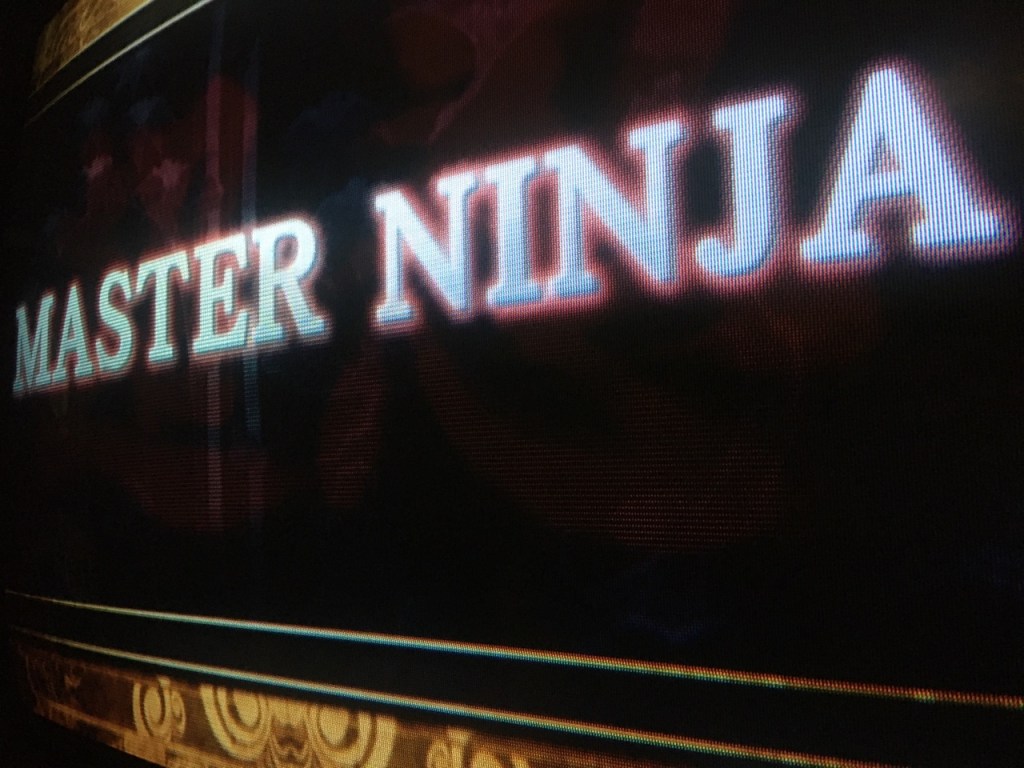
There are still pretty cool-looking points of clashing swords during the fight, in which the player mashes for a guaranteed chunk of damage afterwards, and the consistently long start-up for Doku’s unblockable lunging attack is a fun timing mix-up, whether you evade it or get bonked. However, for me, much of the fight devolved into dodging or blocking similar initial attacks, landing the same three-hit combo (which may be entirely blocked most times) and keeping a finger on the trigger to cancel into blocks when possible, ready to move the left stick for a dodge in such instances. I was awarded a Master Ninja rank for this behaviour, and so I can only assume that the Hayabusa clan highly value the art of flaccidity. When such an expansive system flowchart is forcibly condensed down to such a small one, I just feel bored, and when a boss decides to cancel a block into an unavoidable grab attack, I just feel frustrated. This encounter was greatly disappointing, and epitomised a number of issues I had with the game at large.
As I said earlier, bosses and standard enemies have largely similar combat behaviours, including those with ranged weapons. These include persistent, tracking beams that fire through walls, fully-automatic firearms that deal chip damage, and quickly, infinitely reloadable rocket launchers with inconsistent firing timing and no proximity penalty. These enemies’ attack patterns usually seem to be determined as individuals as opposed to groups, although this could be down to intentionally tighter, more collectively aggressive behavioural timings. This means that a lot of encounters involve assuming that enemies will interrupt your attacks by attacking through one another, and that trying to attack them will often just result in your attacks being blocked and counter-attacked anyway.
Also, throughout Ninja Gaiden: Black, the game’s camera handling often means that Ryu himself is obscuring already minor animation tells, and that’s when it isn’t deciding to freak-out inside a wall. With movement that’s just another part of the combat system’s flowchart, such that gradual direction changes and different movement speeds constitute different behaviour states, having the camera automatically whip around—even to an angle that’s useful—adds inconsistency and uncertainty to the player’s actions. Fixed, far camera angles or less frequent angular changes (perhaps relying solely on the manual recentring command) would probably go a long way in making the game feel more fair, even if only because it’d give the player more consistent information access and movement.
On information availability, an obvious improvement to the boss fight that prompted this write-up (without large, fundamental changes) would be to increase the start-up length for his grab attack, giving the player enough time to jump away. Swinging his arm backwards during the grab’s start-up would also make it more clearly an attack to prepare for, further distinguishing it from Doku’s other movements. Better yet would be the introduction of unique audio cues for different attacks, allowing the player to react and prepare more accurately, while still requiring them to keep on their toes. Many who’ve played Devil May Cry or Bayonetta will know how crucial audio cues can be in informing ideal player behaviour, whether during larger enemy gauntlets or boss fights.
A core impression I have is that, with their flexible flowcharts and unpredictable patterns, Ninja Gaiden: Black’s foes feel more like fighting game characters than action game enemies. This is interesting in itself, especially having experienced the moronic, hiveminded, overtly turn-taking enemies on the other end of the action game spectrum. Even then, more work usually goes into animation tells and audio cues for fighting game characters (unless they’re from Tekken 6 and onwards, flipping into the stratosphere to land a low kick). To me, this is a great example of unfairness probably needing to be further skewed in the player’s favour, via clearer information and predictability, or in short, consistency. Beating Ninja Gaiden: Black is an intense uphill battle, and it often feels like the developers wished it were a sheer cliff.
Originally written on 20/5/24, after having fought against Ninja Gaiden: Black’s Chapter 11 boss, Doku, but before completing the game (which I did later). Later edited for the website on 27/12/24, and further tweaked and posted on 3/1/25.
 Crowence
Leave a comment